The Project: Robust Performance Reviews
This project spanned three core areas of a performance review: the setup and configuration, the process of all parties completing an individual review, and the post-review process of analyzing data and making career decisions. I designed all three.
The work directly contributed to landing our two largest customers — 3SS (~400 employees) and Tools For Humanity (~600 employees) — both of whom left established competitors because those tools lacked the flexibility we provided. We retained every customer we gained during my two years at Topicflow.
My Role
As the only product designer at a small startup, I wore many hats. I owned the entire design process with regular check-ins from our CEO, managed the product side by creating and prioritizing tickets across 4 engineers, and handled customer success — gathering research, fielding feature requests, and following up after releases.
The Core Experience (for the Majority of Users)
Most users of this tool are individual contributors and managers filling out performance reviews. It needed to be immediately obvious what they were looking at and what they had to do. Many employees enter the app from an email or Slack notification, and for some, it’s their first exposure to Topicflow — so clarity at first glance was essential.
1
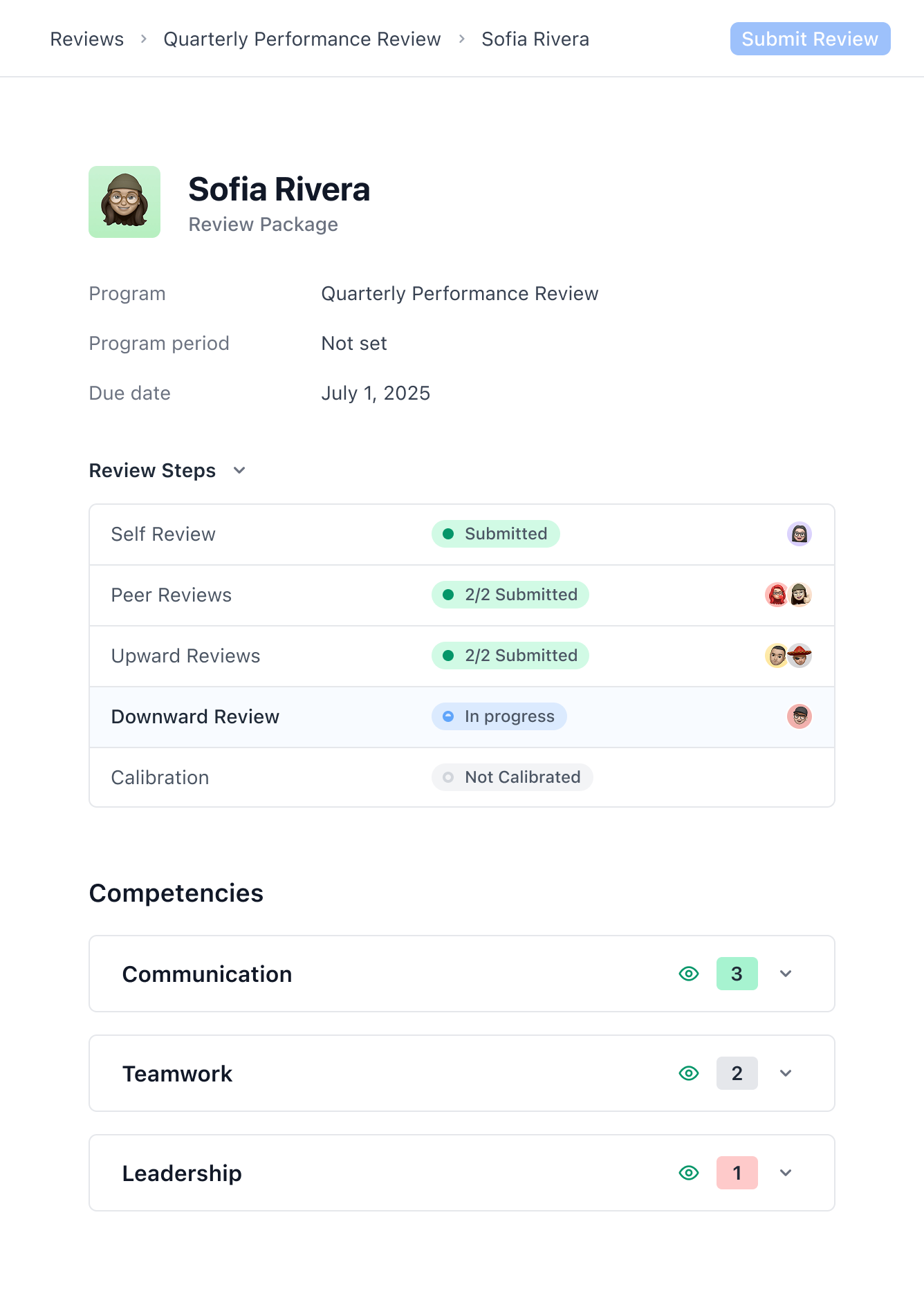
What is the page I'm looking at, and what do I have to do?
2
For managers - who is involved, and what is the status of those who are involved?
3
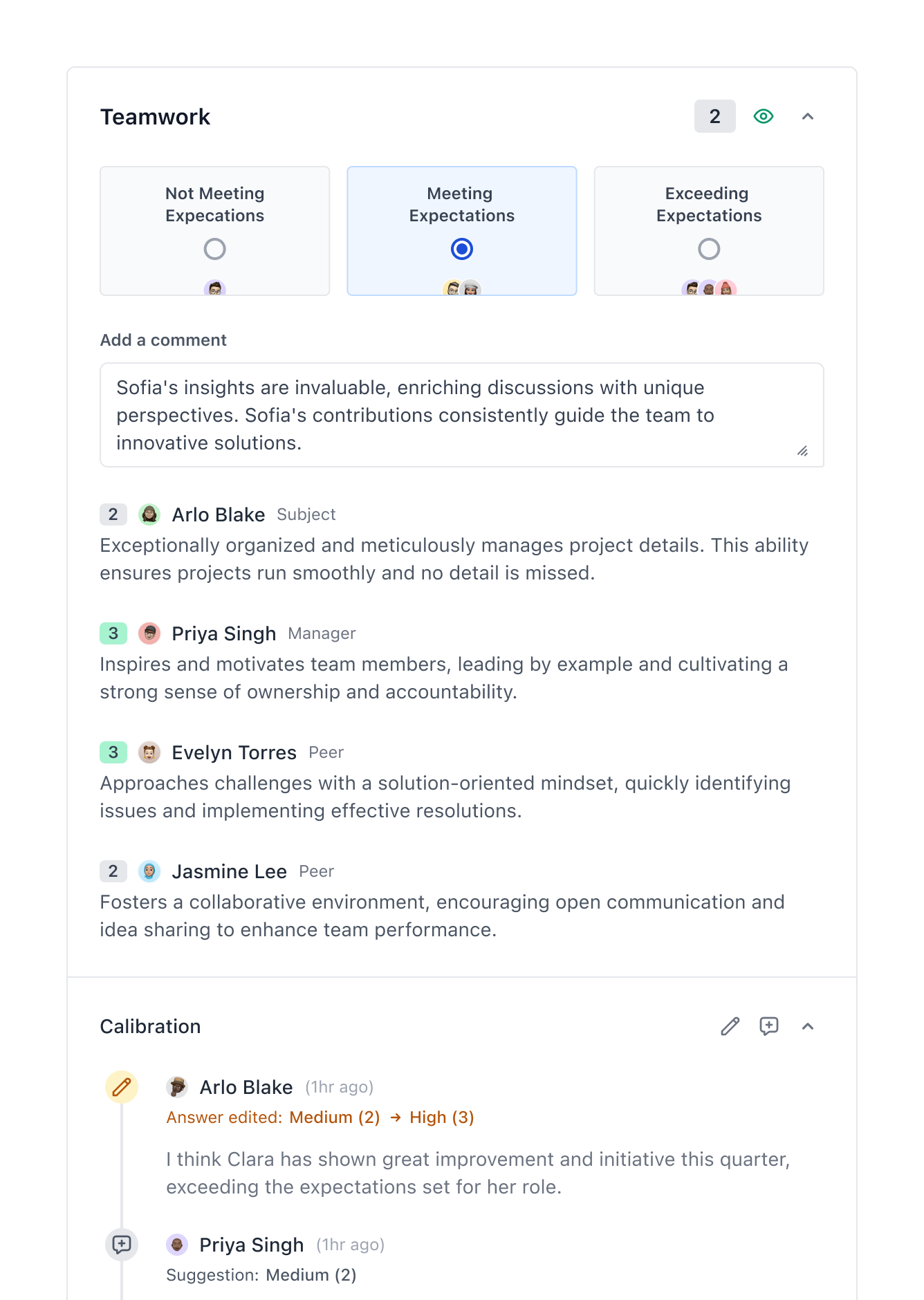
Who has answered each question, and what are the ratings given?
4
Managers and admins must be able to dig into the details, when necessary.
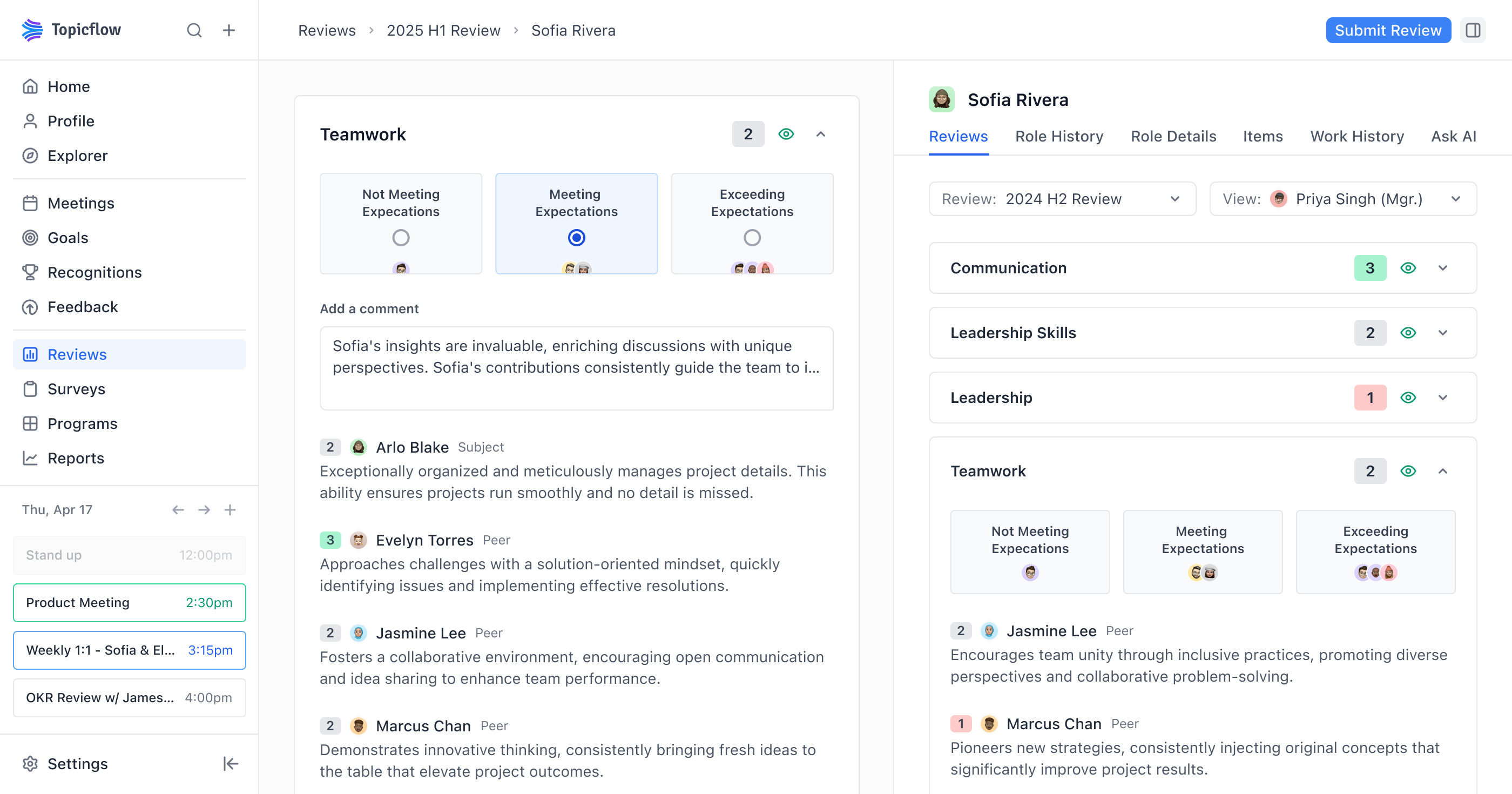
After numerous iterations, we ended with the design shown below. The left side is an example of what a Manager might see, coming into a review process, part-way through. The right side shows an interaction, for a manager, with a question that has already been answered by numerous other employees.
Problem #1: Context is Hard to Gather
Performance reviews typically happen only a few times a year, but managers are asked to assess an entire 6-month or year-long cycle. Too often, they only remember recent events. They wanted a clearer picture across the full time period they’re evaluating.
An Opportunity to Provide More Context
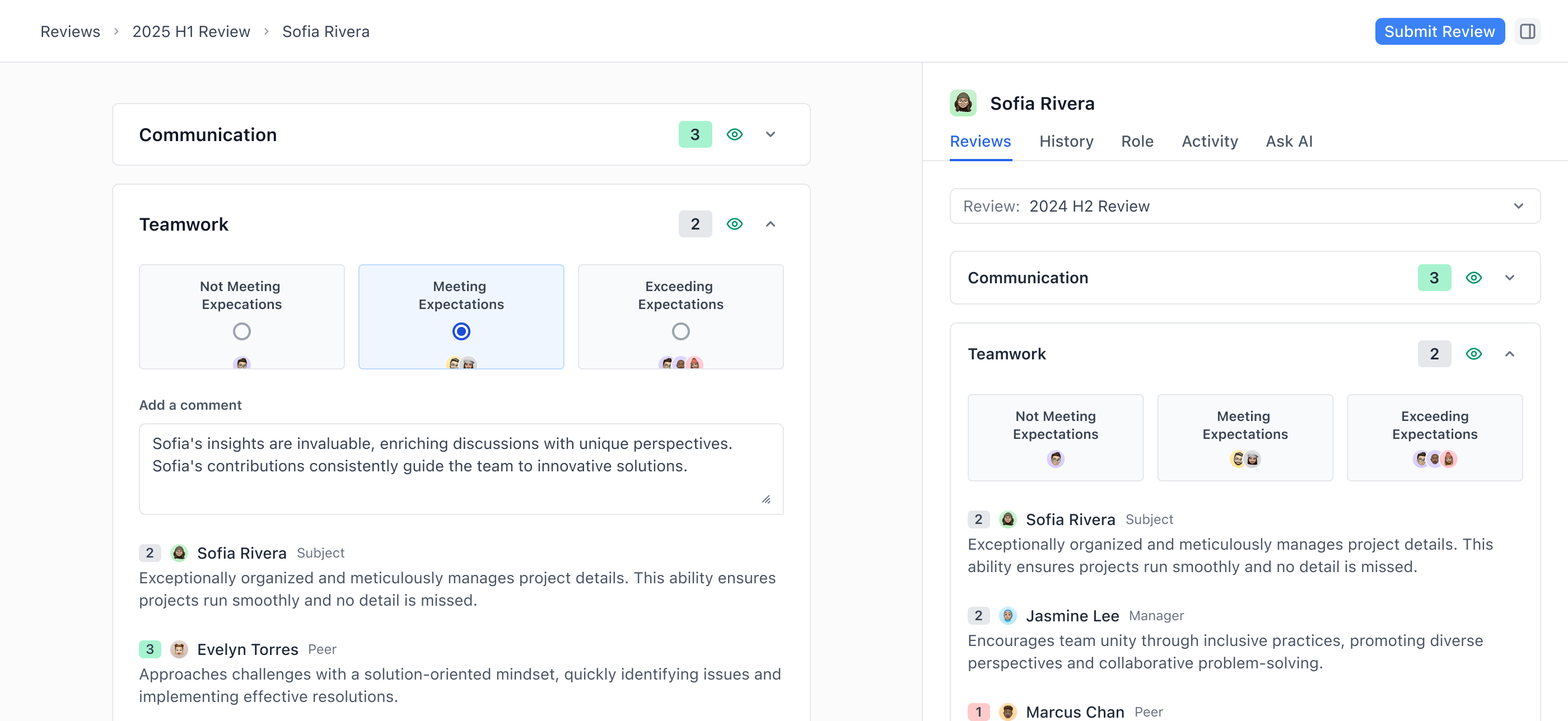
I proposed a persistent context panel that would follow users as they filled out a review. The idea was to surface relevant historical data right alongside each question, rather than making managers search through separate tools. After several rounds of iteration and testing, we narrowed down which data sources were most valuable.
1
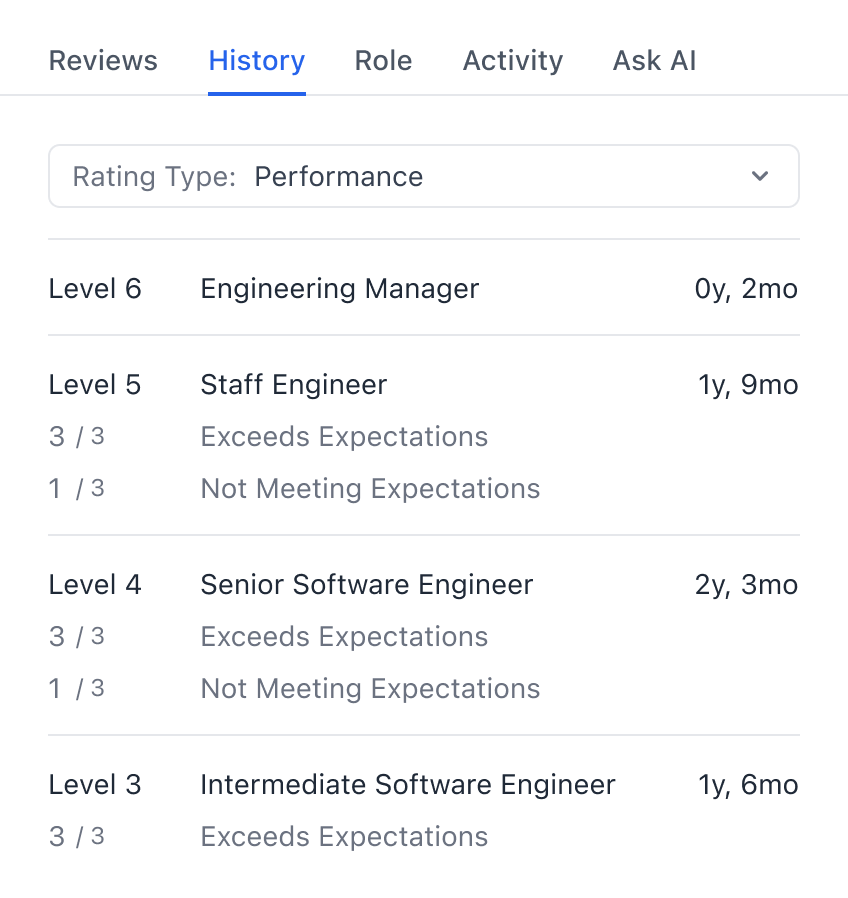
View past performance reviews, and submissions from current review cycle.
2
Role details including competency metric.
3
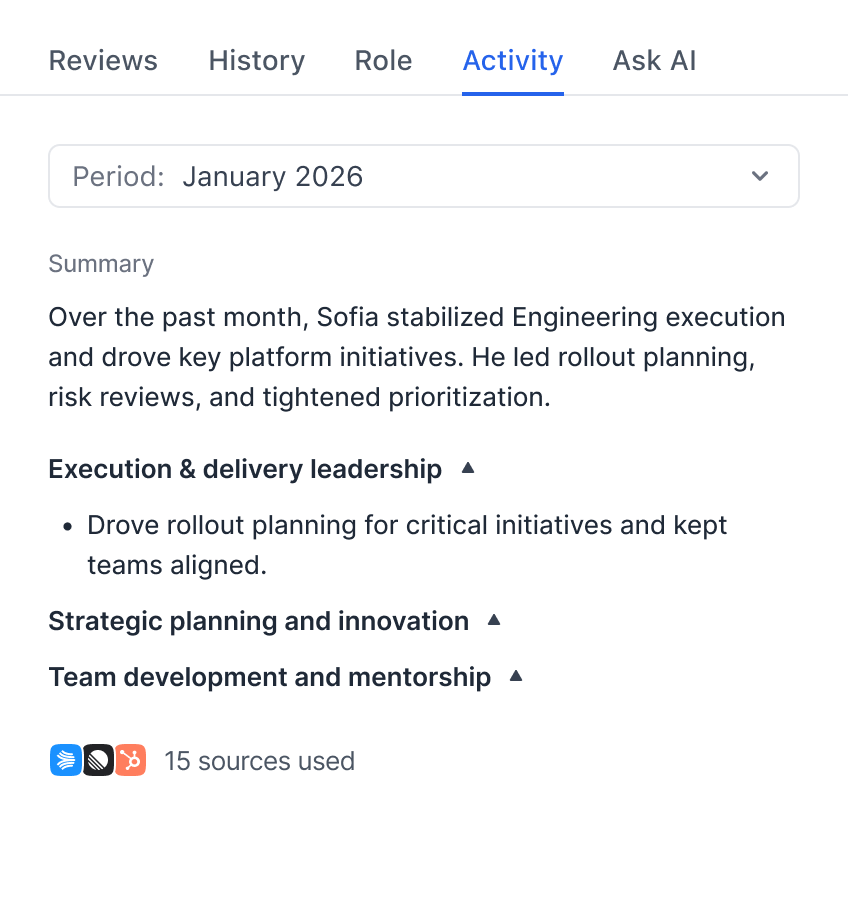
View past work activity from meeting notes/transcripts, Slack, and integrations.
4
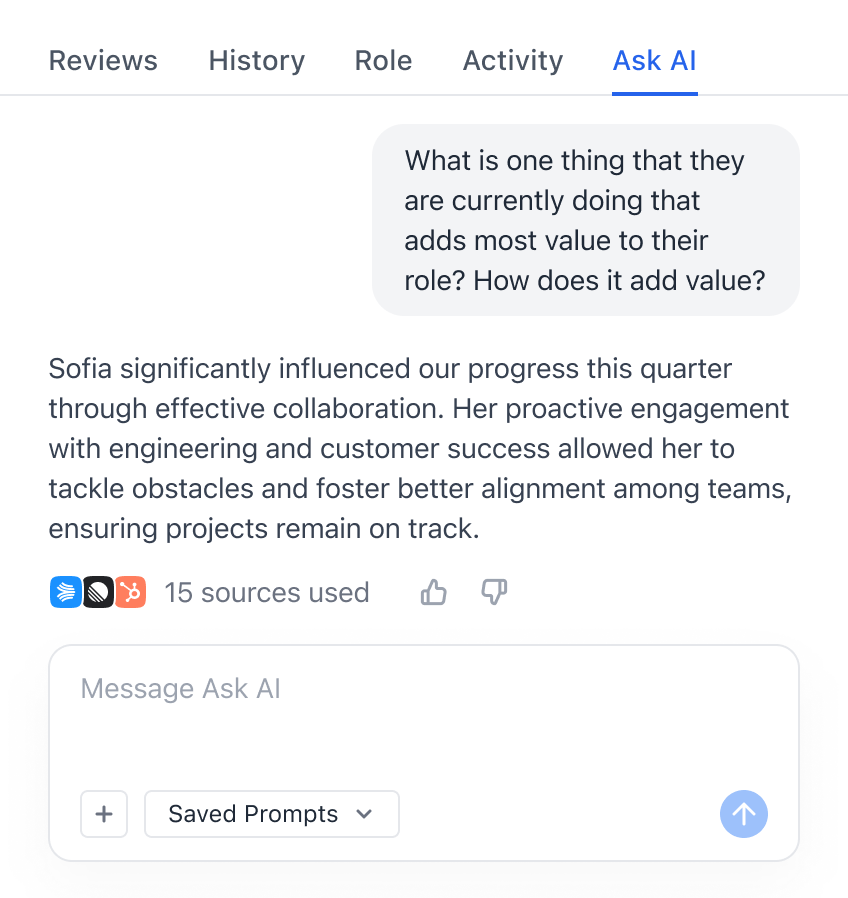
Help with the "blank page" problem. Using AI, support the user when answering questions by providing support and evidence related to the current question.
Here is an example - with the left side showing the review you would be filling out, and the panel on the right. Additionally there are 4 other tabs to switch between for this panel to give the user a wide range of context to reference efficiently.
Outcome: Managers Were Using It
We received strong positive feedback on the context panel. The challenge was that the quality of the experience depended on users actually curating data — maintaining goals, using meeting transcription, and keeping records current. Not everyone did.
We leaned into this constraint by partnering closely with companies and managers who were already committed to thorough processes. For them, the payoff was significant: all the context they needed was surfaced in one place, eliminating the need to search through multiple tools during a review.
Problem #2: Every Company has a Different Process
Performance reviews are widespread, but every organization runs them differently. The larger tools in the market offered rigid workflows that didn’t bend to match how teams actually operated. We saw a gap: if we could provide genuinely flexible configuration, we’d win customers that the incumbents were losing.
Balancing Flexibility and Technical Constraints
Full flexibility sounds ideal for users, but it creates exponential complexity for the engineering team. I worked closely with our engineers to identify where we could offer meaningful customization without creating an unmaintainable system. We interviewed existing teams to map the most common use cases, and spoke with prospective customers who were leaving other tools to understand exactly what was missing.
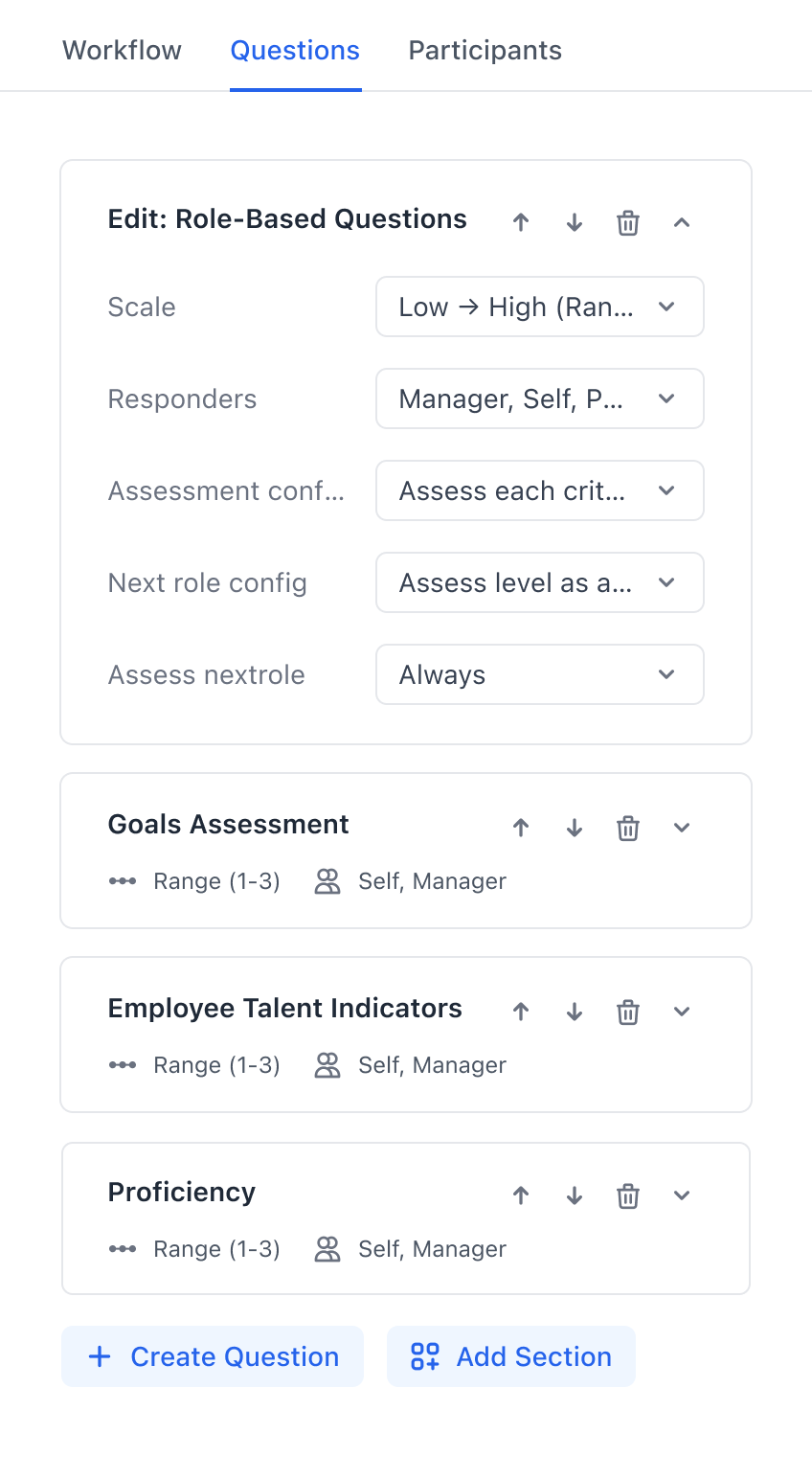
1
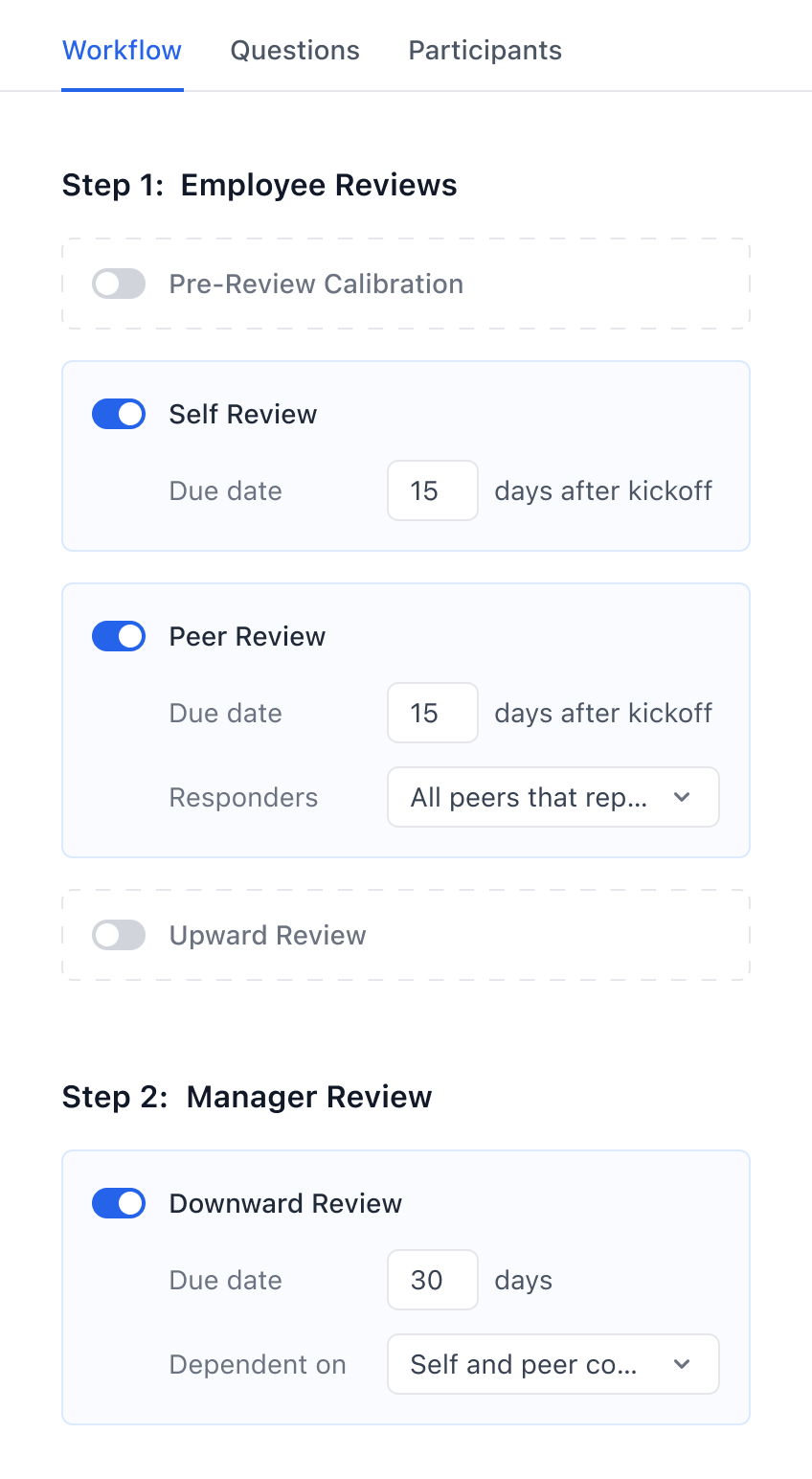
Able to determine criteria for each stage in a review. Which stages exist, when they happen, and whether they're dependent on each other.
2
For each question, you should be able to define who responds, who it is visible to, and where it shows up in the review.
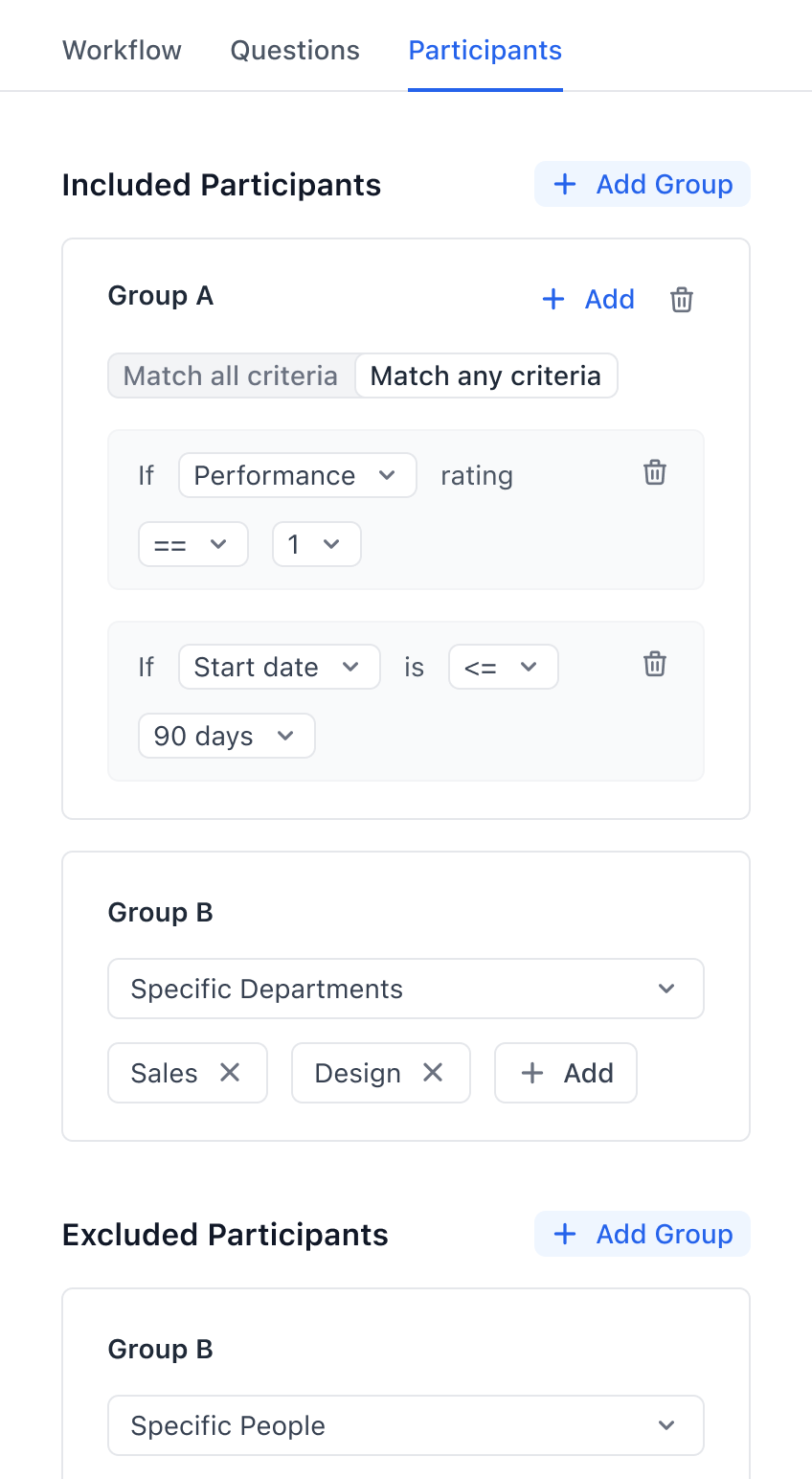
3
Admins should be able to define custom rules for participant selection, including past review data, survey data, goal statuses and demographic information.
The configuration screens below prioritize functionality over visual polish — a deliberate choice, since only 2–3 admins per organization would use them. I focused on clear information hierarchy and grouping related settings together so admins could set up complex review workflows without needing documentation.
Outcome: Landing New Customers
This flexibility became our core differentiator. Organizations that had outgrown rigid competitors came to us specifically because we could accommodate how they actually worked.
The clearest validation came when we landed 3SS (~400 employees) and Tools For Humanity (~600 employees) — our two largest customers. Both had left established tools because those platforms couldn’t support their specific review processes. We worked directly with their HR teams to build solutions that met needs other tools weren’t willing to address.
Problem #3: Making Sense of All the Data
Performance reviews generate a lot of data, and every stakeholder — HR admins, executives, middle managers, front-line managers, and the review subjects themselves — needs to interact with that data differently.
Fitting Everything Into One View
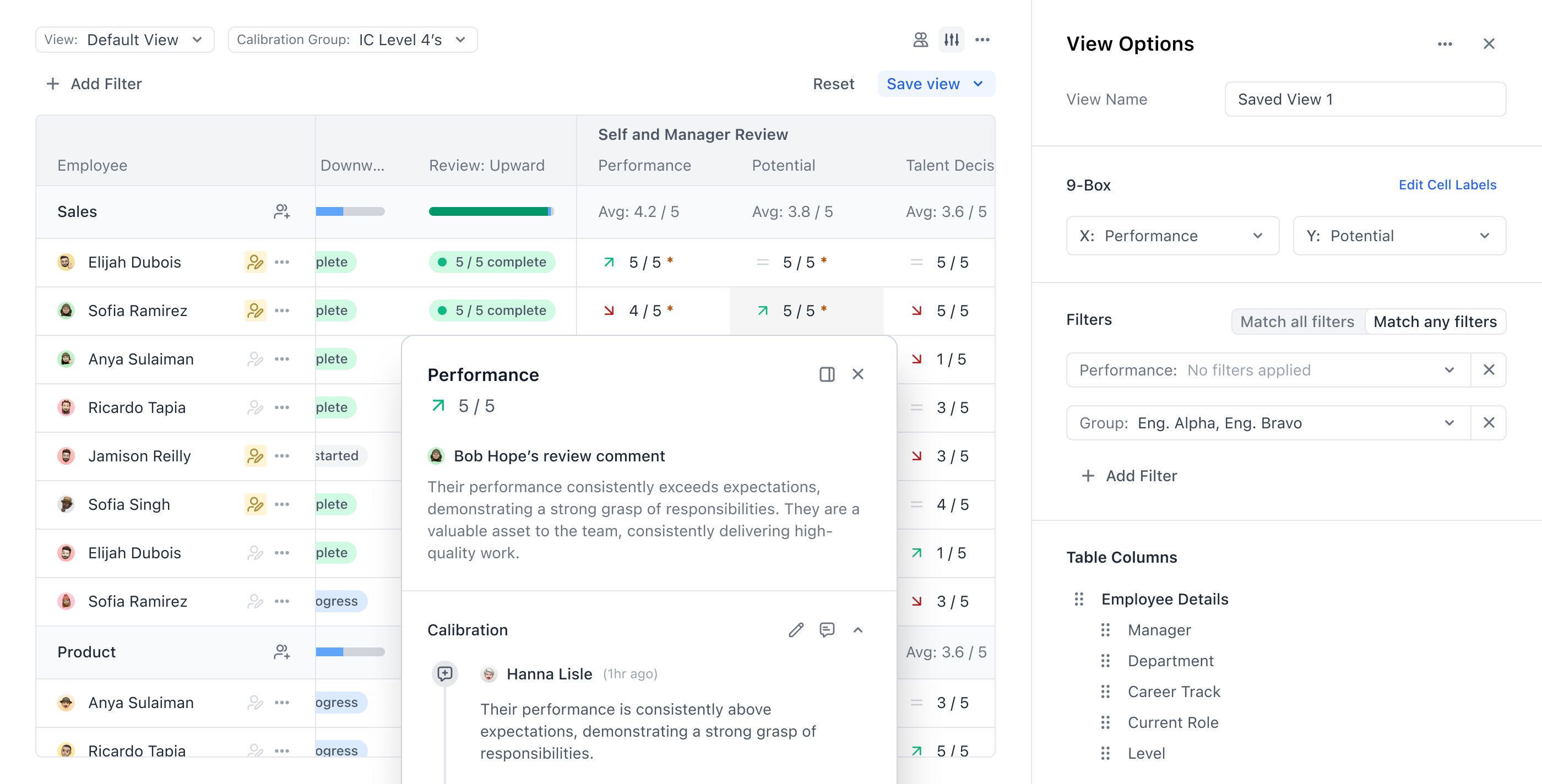
Rather than spreading functionality across multiple pages, I designed a single reporting view that could serve all of these stakeholders. The principle was the same as the review experience: provide high-level information at a glance, with the ability to drill into details without leaving the page.
1
Must be able to filter, sort, organize columns and save custom views.
2
Able to see progress related to each individual, as well as employee details.
3
Comment on ratings, modify ratings, and easily see which ratings have been modified.
4
Ability to view the full review, as well as other contextual data that relates to the subject of the review.
5
Control permissions of who can see which people's data, and create groups that define these permissions.
From within this view (screenshot below), you would be able to modify ratings, leave comments, and then also access filters, sorting, saving custom views, and define permissions.
Let's Dive Deep
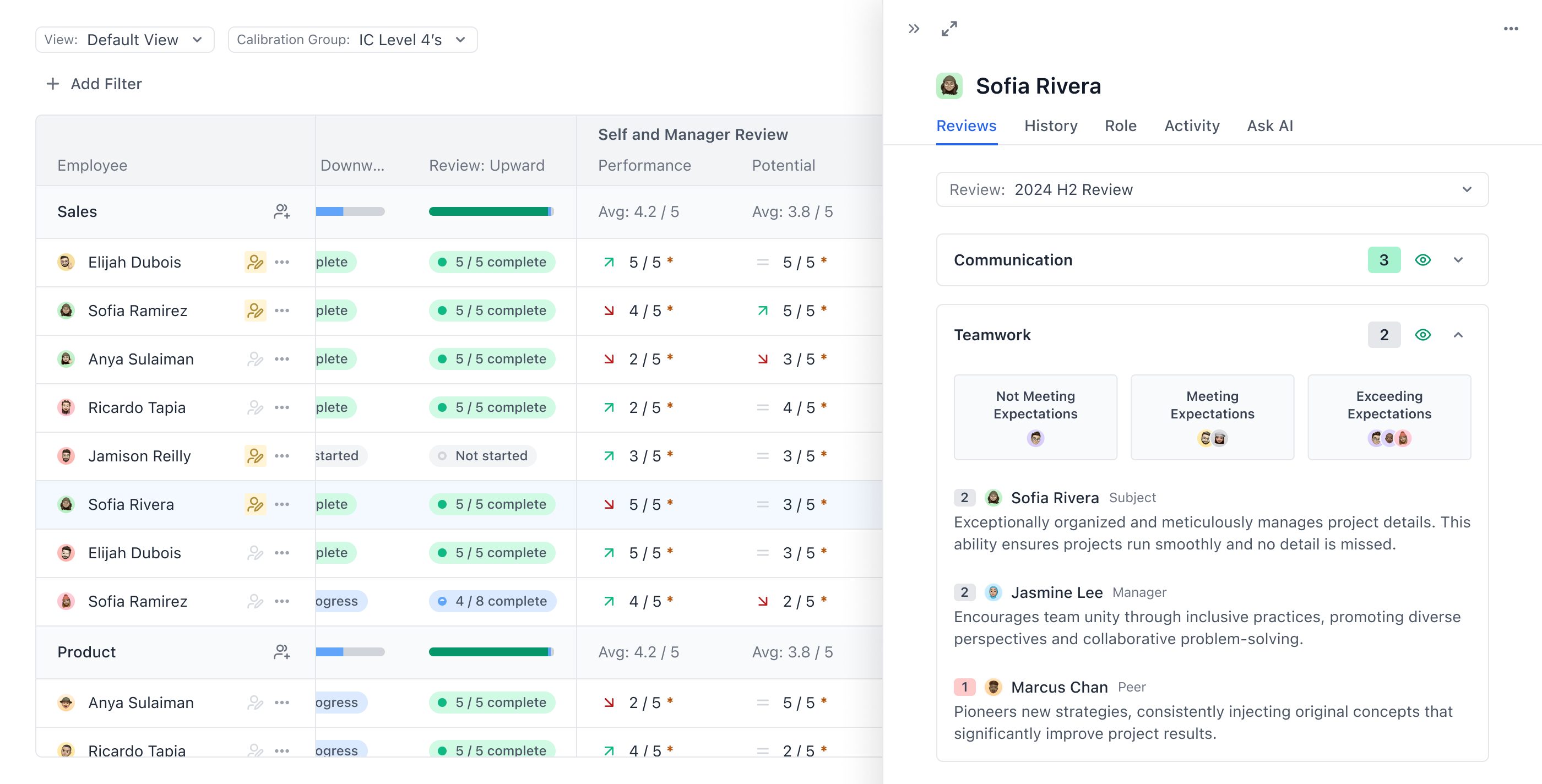
This is a screenshot of the drawer that opens when you click on an employee in the reporting view. It allows you to access the relevant review, as well as any other data that was provided for the people filling out the review. It was important that the context and visibility that was given during the review wasn't lost when users would be analyzing all of the data from the entire review process.
Outcome: From Spreadsheets to Scalable Processes
Many of the teams that came to Topicflow had been running their entire review process through spreadsheets — manual, error-prone, and slow. The established tools in the space had high churn rates because they couldn’t flex to match how organizations actually operated.
Retaining Every Customer
Performance reviews were Topicflow’s core product and main selling point. During the two years I was there, we retained every customer we gained. Multiple customers told us that the flexibility of our processes let them spend less time managing the tool and more time on what actually matters in a performance review — the people.
 Product Designer
 Product Manager
 Customer Success
 Vancouver, BC (Hybrid)
 2024 → Present